Fanny Robin’s tombstone
Far from the Madding CrowdFanny Robin’s tombstone begins as Sergeant Troy’s extravagant, remorse-driven memorial to the woman whose death he learns of too late; it ends as a shared grave marker recording both Fanny and Troy. The marble object gathers the novel’s reversals into one place: Troy’s belated tenderness, Bathsheba’s encounter with the evidence of his past, and the final inscription that gives their deaths a common ground.
Purchase and Design
After reaching Budmouth races, Troy keeps his vow not to bet, but only later recognizes that Fanny may have been prevented by illness from meeting him. He regrets not staying in Casterbridge to make inquiries. At dawn he finds the newly dug grave that had been prepared for Fanny, marks its position, and goes to Casterbridge to order a memorial. In the stonecutter’s yard he asks for the best tomb available for twenty-seven pounds, all the money he has, insisting that the price include the inscription, transport to Weatherbury, and erection, and that the work be done immediately. His haste and refusal to economize register a sharp reversal from the indifference with which he had previously treated Fanny’s fate.
The chosen monument is a marble headstone with crocketed decoration and medallions, matched by a footstone and a coping to enclose the grave. Troy waits while the inscription is added and the structure is prepared, then directs its delivery to Weatherbury. The scale and finish of the memorial make his remorse materially visible, but the purchase is also impulsive: he spends everything he possesses on a monument that can testify to devotion only after Fanny is dead.
Flowers and First Inscription
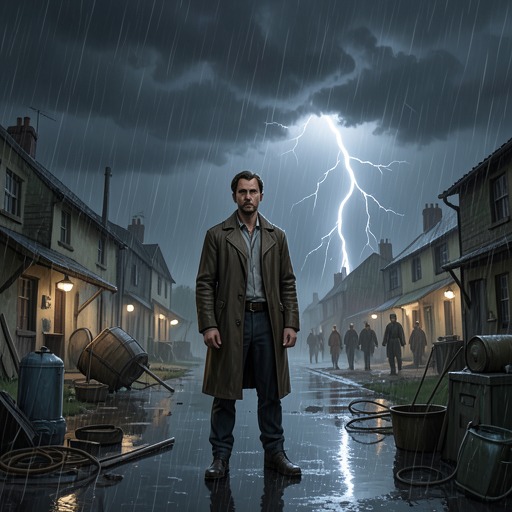
Returning to the churchyard at night, Troy finds the marked spot cleared of alder and installs the tomb in the graveyard’s secluded corner. He brings a basket of flower roots and bulbs, a spade, and a lantern. Snowdrops are set outside the marble coping; crocuses and hyacinths are arranged in rows inside it. He places summer flowers over Fanny’s head and feet, lilies and forget-me-nots over her heart, and distributes the remaining plants through the enclosure. The arrangement tries to make the grave bloom through the seasons, converting a fixed monument into a planned sequence of future flowers.
The undertaking is interrupted when rain enters the lantern and puts out its candle. Troy, weary and unable to finish, leaves the planting until daylight and falls asleep in the church porch. The next morning Bathsheba encounters the disturbed grave and the tomb, with Gabriel Oak already looking at it. Its inscription identifies the donor: “Erected by Francis Troy in Beloved Memory of Fanny Robin.” Bathsheba asks Gabriel to fill in the hole with the spade and gathers the flowers to plant them herself. She also asks him to have the churchwardens redirect water from the church gargoyle so the mishap will not recur, and wipes mud from the marble. The tomb brings Troy’s concealed history into view, while Bathsheba’s practical tending of it turns the memorial from his solitary gesture into an object she helps preserve.
Shared Grave and Later Inscription
Months later, Bathsheba returns to the secluded nook and reads the completed inscription. Troy’s original words remain at the top, now followed by Fanny’s death date and age: she died on October 9, aged twenty. Beneath this, a later addition records that the remains of Francis Troy lie in the same grave, and gives his death date as December 24. The tombstone thus changes from a memorial to Fanny alone into a record of two deaths; the man who commissioned it in remorse is ultimately named as its second occupant.
The object’s meaning depends on this physical revision. Troy’s declaration of beloved memory survives, but it no longer stands apart from his own fate. The shared grave makes the story’s belated attachments literal: his memorial to Fanny becomes his own memorial too, while the inscription preserves the order in which their deaths occurred. In the final visit, Bathsheba reads the stone and listens to children practicing “Lead, kindly Light” inside the church. The tomb has become not simply a marker of loss but a point at which the past’s grief returns to her, now with the names and dates of both dead fixed in marble.